Products
Host Cell Residue Detection
Process Impurity Assay
Advnetitious Agent/Microorganism Testing
Pyrogen / Endotoxin Detection
Genetic Stability
Cell Line Characterization
Viral Titer Assay
Detection Equipment
Biochemical Reagents

Against the booming wave of biologic products, endotoxin testing for monoclonal antibodies, vaccines and other formulations is subject to increasingly stringent quality requirements. The risk of false-negative endotoxin test results caused by Low Endotoxin Recovery (LER) stemming from endotoxin masking has become a major challenge for pharmaceutical companies during regulatory filings.
Since the first report of the LER phenomenon in April 2013, extensive research and documentation of LER have been conducted in biologic formulations and protein therapeutics. In response, the U.S. FDA has mandated enterprises to establish sample storage and handling procedures for bacterial endotoxin analysis supported by laboratory data, namely Hold-Time Studies (HTS) specific to each product.
01 Global Regulatory Requirements for LER
U.S. FDA: Starting in 2013, LER study reports must be submitted alongside Biologics License Applications (BLAs) for biologic drugs.
European EMA: In its 2023 Questions & Answers on Biological Medicinal Products, the EMA stipulates that marketing authorization applications for formulations containing surfactants (e.g., polysorbate) and chelating agents (e.g., EDTA, citrate, phosphate, histidine) must include LER study data.
Chinese Pharmacopoeia (2025 Edition): LER-related content has been newly added to General Chapter 9251 Guidance on the Application of Bacterial Endotoxin Test.
GMP Guidelines for Pharmaceuticals (2nd Edition): Volume II of the Sterile Products section, Biological Products (Monoclonal Antibodies) and Cell Therapy Products, specifies LER requirements under quality control for downstream manufacturing processes.
02 Definition of the LER Phenomenon
Low Endotoxin Recovery (LER) refers to a scenario where, over time, spiked endotoxin standard (CSE) in undiluted drug products/formulations yields recoveries below 50% at two consecutive time points when tested via the Bacterial Endotoxin Test (BET).
03 Occurrence Scenarios of LER
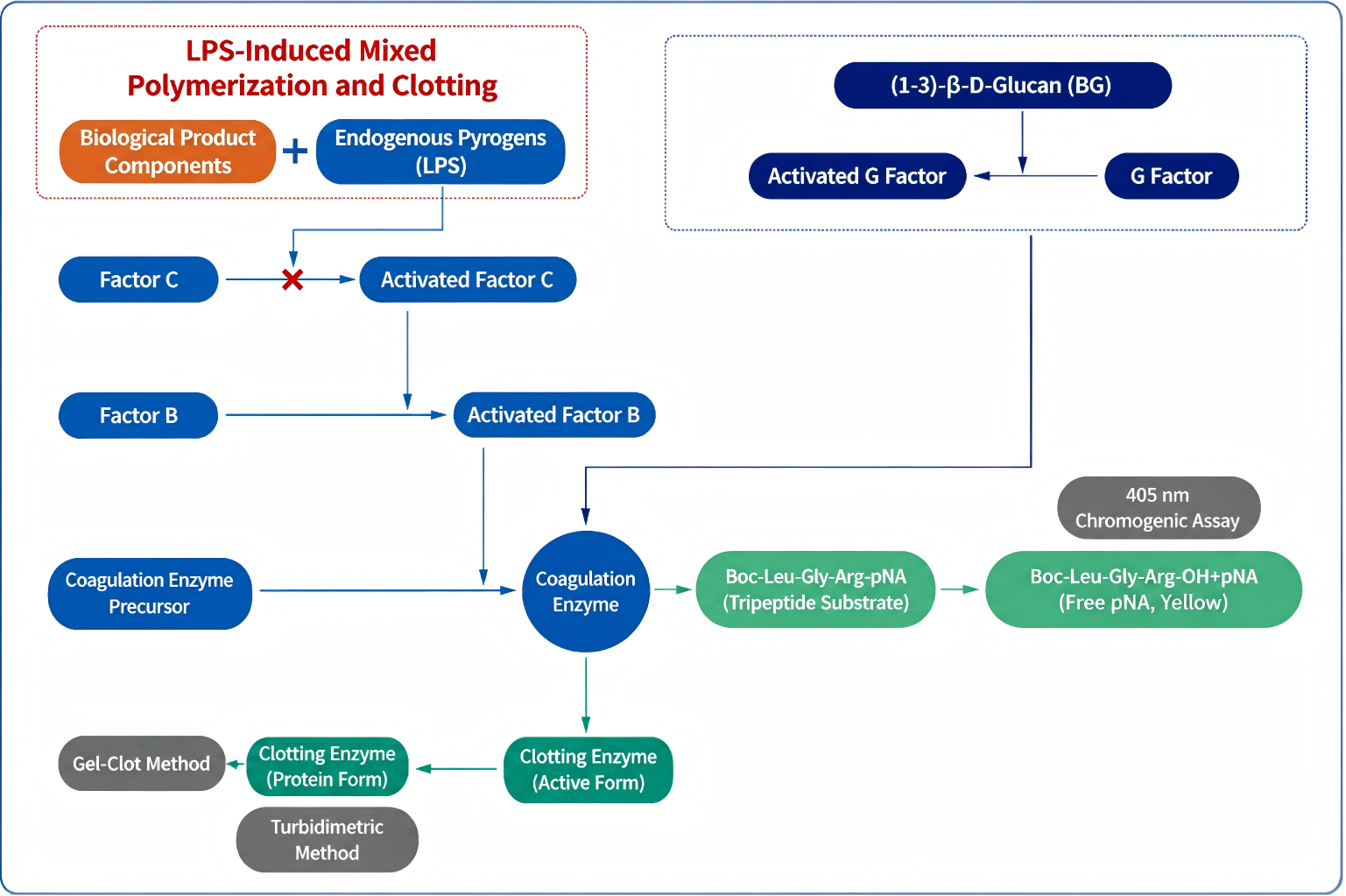
To date, LER research primarily centers on biologic products, particularly monoclonal antibodies and therapeutic proteins. Such products routinely incorporate polysorbates to prevent protein aggregation and chelating buffer systems to maintain optimal pH.
LER discussions are predominantly framed within biologic manufacturing workflows
Formulations containing histidine have occasionally been linked to LER occurrence
Over 70% of protein formulations utilize polysorbates as excipients
Combinations of common biologic excipients—polysorbates paired with chelating agents (citrate or phosphate buffers)—are confirmed triggers of LER
LER interference differs fundamentally from conventional interferences encountered with Limulus Amebocyte Lysate (LAL) reagents; it cannot be resolved via routine dilution or standard sample preparation techniques
04 LER vs. Conventional Interferences in Endotoxin Testing
Pharmacopoeias worldwide require sample dilution to eliminate interferences for valid endotoxin testing, with acceptable endotoxin recoveries ranging from 50% to 200%. Research confirms LER cannot be eliminated through dilution to achieve recoveries within the 50–200% range, as it is a time- and temperature-dependent phenomenon.
Item | LER | Conventional Interferences |
Manifestation | Endotoxin recovery < 50% | Inhibition or Enhancement |
Causative Factors | Combinations of chelating agents and surfactants | Inhibition: Improper pH of the test sample, lack of divalent cations, presence of oxidants and other matrices in the test sample that reduce the enzymatic activity of LAL reagents, etc.Enhancement: β-glucans |
Key Contributing Variables | Time-dependent; linked to formulation, temperature and open-process conditions | Concentration-dependent |
Mitigation Approach | Cannot be eliminated by dilution | Primarily resolved via serial dilution |
Verification Assay | Hold-Time Study (HTS) | Interference Test |
Endotoxin spiking into undiluted product; poor recovery of spiked endotoxin observed at two consecutive time points over storage | Recovery > 200% or < 50% | |
Regulatory Guidance | No standardized LER evaluation process defined in regulatory documents (only PDA Technical Report No. 82) | Specified in all major pharmacopoeias |
Applicable Scope | New biologic product regulatory filings | All pharmaceutical products |
05 LER Solutions: Standardized Research Workflows and Innovative Technical Support
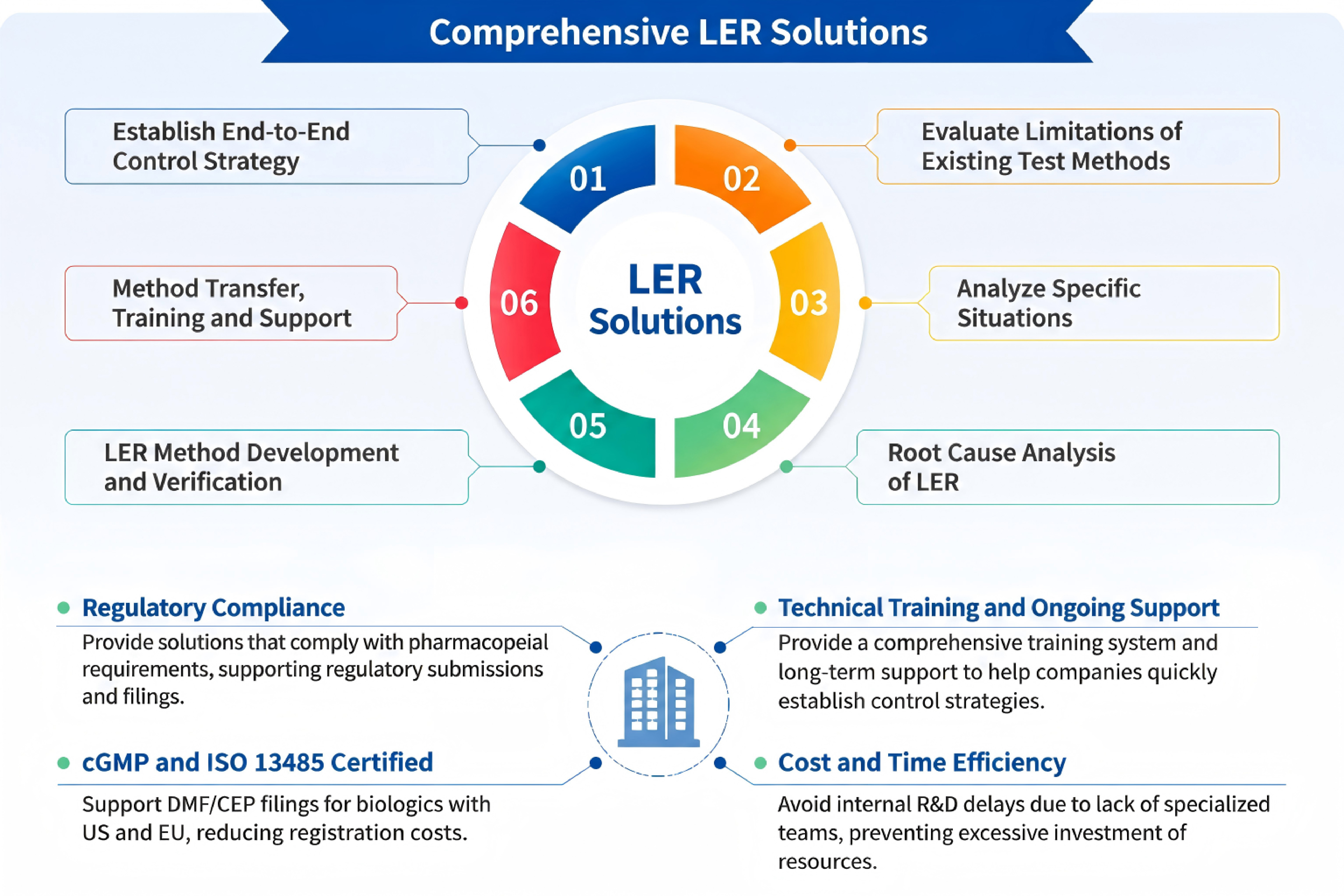
Huzhou Shenke Biotechnology Co., Ltd. (HZSKBIOⓇ) maintains a complete pyrogen testing product portfolio, covering detection reagents, reference standards and sample pre-treatment reagents. We deliver end-to-end solutions spanning routine endotoxin testing to specialized technical research for complex LER challenges, with rapid, tailored technical support.
MAT Test Kits: Combined endotoxin and non-endotoxin (β-glucan) detection
Recombinant Cascade Reagents (rcR): Minimize G-factor false positives and mitigate LER
Kinetic Turbidimetric LAL Reagents: For in-process manufacturing monitoring
Gel-Clot LAL Reagents: Rapid, convenient routine testing
06 Application Case Studies
Huzhou Shenke Biotechnology Co., Ltd. (HZSKBIOⓇ) has independently developed proprietary sample pre-treatment reagents that effectively alleviate LER. These products have been deployed for domestic clients and supported overseas regulatory filings.
The reagents resolve endotoxin masking induced by surfactants or proteins, delivering superior LER mitigation performance versus competing LAL reagents, and are fully compatible with kinetic turbidimetric assay kits.
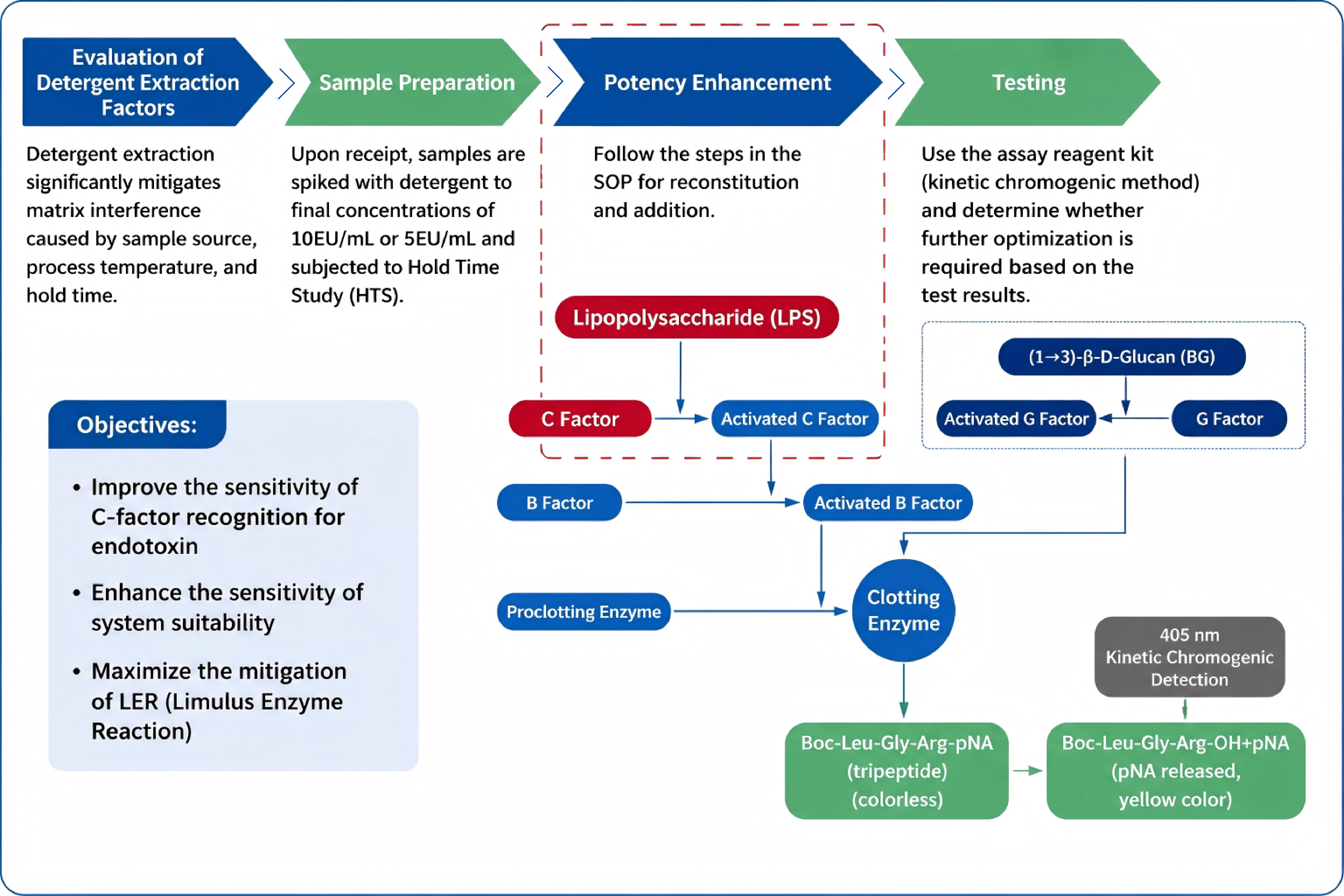
LER Mitigation: HZSKBIOⓇ Kinetic Turbidimetric LAL
Test Kit | Competitor A Kinetic Turbidimetric LAL Reagent | Huzhou Shenke Kinetic Turbidimetric LAL Reagent (HZSKBIOⓇ) | ||
Test Sample | Measured Endotoxin (EU/mL) | Recovery % (Theoretical Spike Level: 5 EU/mL) | Measured Endotoxin (EU/mL) | Recovery % (Theoretical Spike Level: 5 EU/mL) |
Day 0 Water Control | 4.8 | 96 | 5.3 | 106 |
Day 0 Test Article | 1.62 | 32 | 3.6 | 72 |
4 h Test Article | 1.93 | 39 | 3.4 | 68 |
Day 1 Test Article | 2.18 | 44 | 3.5 | 70 |
Day 3 Test Article | / | / | 3.4 | 68 |
Day 5 Test Article | / | / | 3.3 | 66 |
Day 7 Test Article | / | / | 3.1 | 62 |
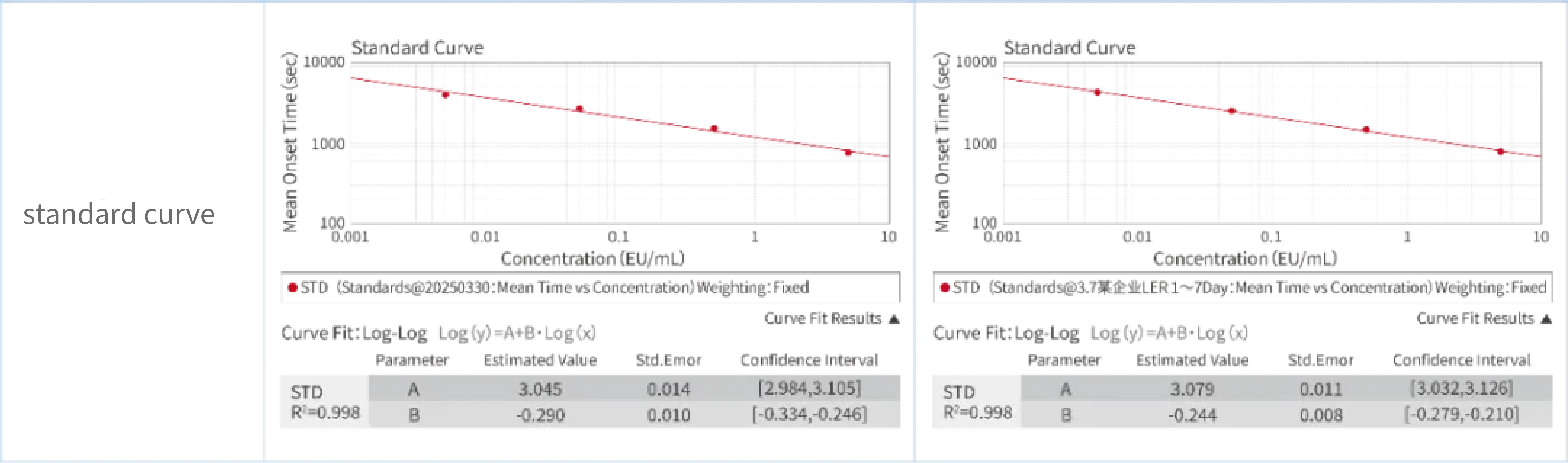
This validated LER resolution case has successfully supported overseas regulatory submissions
07 Conclusion
The root causes of LER vary widely across sample matrices, and no universal single solution exists within the industry. Enterprises must explore tailored pre-treatment protocols, hold-time study designs and alternative analytical methodologies for individual samples to identify optimal testing workflows.
Furthermore, LER risk control should not be limited solely to final finished products. Risk mitigation must be advanced upstream to manufacturing processes to prevent undetected pyrogen contamination, which would compromise patient safety and delay regulatory filing timelines.