Products
Host Cell Residue Detection
Process Impurity Assay
Advnetitious Agent/Microorganism Testing
Pyrogen / Endotoxin Detection
Genetic Stability
Cell Line Characterization
Viral Titer Assay
Detection Equipment
Biochemical Reagents

Upon activation by pyrogens, Toll-like receptors trigger the release of multiple cytokines. The selection of the most representative biomarker within this complex cytokine network directly determines the quantitative accuracy and reliability of the Monocyte Activation Test (MAT).
01 Digging Deep into Cytokine Subgroups
As inflammatory regulatory proteins that act as "messengers" in immune responses, cytokines fall into two functionally counterbalancing categories. Pro-inflammatory cytokines (e.g., IL-1, IL-6, TNF-α) serve as the vanguard that initiates inflammatory responses, while anti-inflammatory cytokines (e.g., TGF-β, IL-37) function as regulators to maintain immune balance and prevent excessive reactions[1].
Which subgroup should be used as the detection biomarker in MAT assays? Fluorescence staining experiments conducted by Croce CM provided critical evidence. As illustrated in Figure 1, pyrogen stimulation specifically and robustly activates the NF-κB pathway linked to pro-inflammatory cytokine secretion in monocytes (evident as solid staining), whereas anti-inflammatory cytokine pathways exhibit minimal responsiveness[2].
This finding confirms the dominant role of pro-inflammatory cytokines in pyrogen-induced reactions. Accordingly, subsequent MAT research has focused exclusively on pro-inflammatory cytokines to identify an optimal biomarker and guarantee quantitative detection accuracy and specificity.
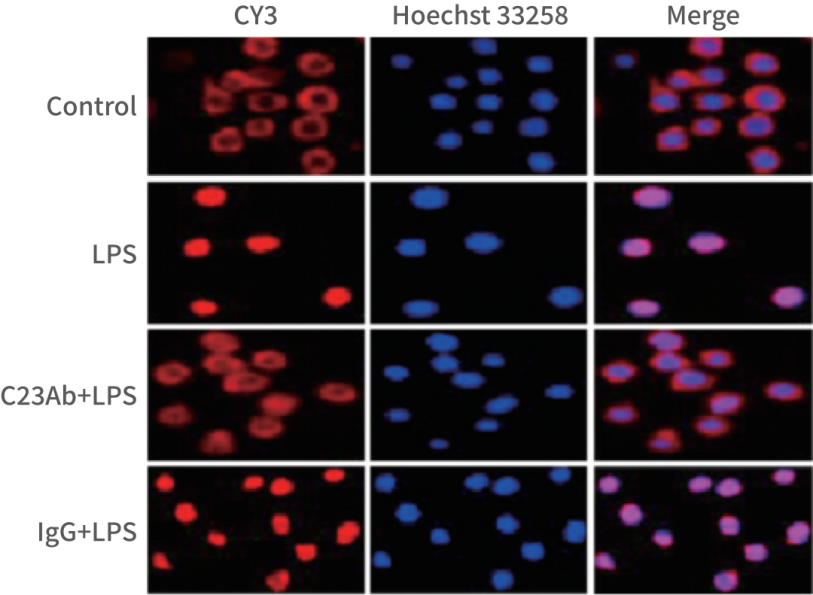
Figure 1. NF-κB phosphorylation in monocytes after 60 minutes of LPS stimulation. (CY3 staining targets NF-κB pathway proteins; Hoechst 33258 stains cell nuclei. C23Ab represents the Toll-like receptor inhibitor, and IgG serves as the inhibitor control. Groups: Control, LPS, C23Ab+LPS, IgG+LPS)
02 Unraveling the Rationale Behind IL-6 Selection
PyroSup™ Pyrogen Detection Kit (MAT Method) developed by Huzhou Shenke Biotechnology Co., Ltd. (abbreviated HZSKBIOⓇ) adopts IL-6 as its core detection biomarker and optimizes incubation duration around this target. This decision is backed by multi-dimensional scientific evidence, as detailed below:
IL-6 Is the Core Mediator of Pyrogenic Reactions Consistent with Human Physiology
Mechanistic research from Stockholm University yielded pivotal data from animal fever models mimicking human febrile responses. IL-6 knockout mice completely lost the capacity to develop fever upon LPS exposure, while IL-1β knockout showed no impact on fever induction. This proves IL-6 is an indispensable core node in the pyrogenic cascade[3].
Further studies revealed that the pyrogenic effects of upstream factors such as TNF-α are fully dependent on IL-6 mediation. When IL-6 is neutralized or genetically deleted, TNF-α fails to effectively induce hyperthermia[3]. At the molecular level, this establishes IL-6 as the final common signaling pathway for fever induction.
Global Expert Consensus on IL-6 as the MAT Signature Biomarker at the EDQM Conference
This scientific conclusion aligns with the global expert consensus reached at the 2009 EDQM Conference on the Future of Pyrogen Testing. The conference report explicitly states that IL-6 offers distinct advantages in resolving common pain points of pyrogen testing across diverse sample matrices and improving method reliability and applicability, and is therefore widely recommended as the core detection biomarker for MAT assays[4].
Table 1. Summary of IL-6 applications cited in the EDQM conference report
Company/Institution | Relevant Personnel | IL-6-Related Applications |
Center for Drug Evaluation, NMPA, China | Qing He | Developed PBMC and monocyte-based MAT assays using IL-6 readouts to address stability and accuracy limitations in LPS detection |
GSK (Italy) | Liliana Alleri | Adopted IL-6 ELISA readouts with MAT Method C (reference batch comparison) to enable consistency testing for intrinsically pyrogenic vaccines (e.g., Bexsero) |
Sanofi (France) | Emmanuelle Coppens | Utilized IL-6 as the primary readout for process consistency validation and routine release testing of intrinsically pyrogenic products, overcoming analytical complexities of vaccine samples |
Takeda Pharmaceutical | Peter Turecek | Integrated IL-6-based MAT as an alternative or complementary strategy to BET for pyrogen safety control of plasma-derived products |
Closed-Loop Validation via In-House Experimental Data from HZSKBIOⓇ
During the biomarker selection process, we systematically evaluated candidate cytokines using published literature and internal experimental data to complete a full scientific validation workflow for IL-6.
Mechanistic matching data ruled out IL-1β due to its poor correlation with pyrogenic responses. We then performed head-to-head comparisons between IL-6 and TNF-α, and experimental data clearly demonstrated the superior performance of IL-6:
(1) Outstanding Detection Sensitivity and Broad Linear Range
Using Sample S1 stimulated with 5 EU/mL LPS as a test matrix, IL-6 secretion averaged 13.404 pg/mL even at a 1000-fold high dilution, delivering robust detection signals and a wide linear quantification window.
(2) Eliminates the Saturation Limitation Observed with TNF-α
In contrast, TNF-α secretion plummeted to an average of only 17.892 pg/mL at merely 16-fold dilution. This sharp decline caused by saturation ablates valid dose-response relationships at high dilutions. TNF-α’s critical shortcoming prevents the use of high dilution factors to resolve matrix interference in complex samples such as polymyxin-class antibiotics.
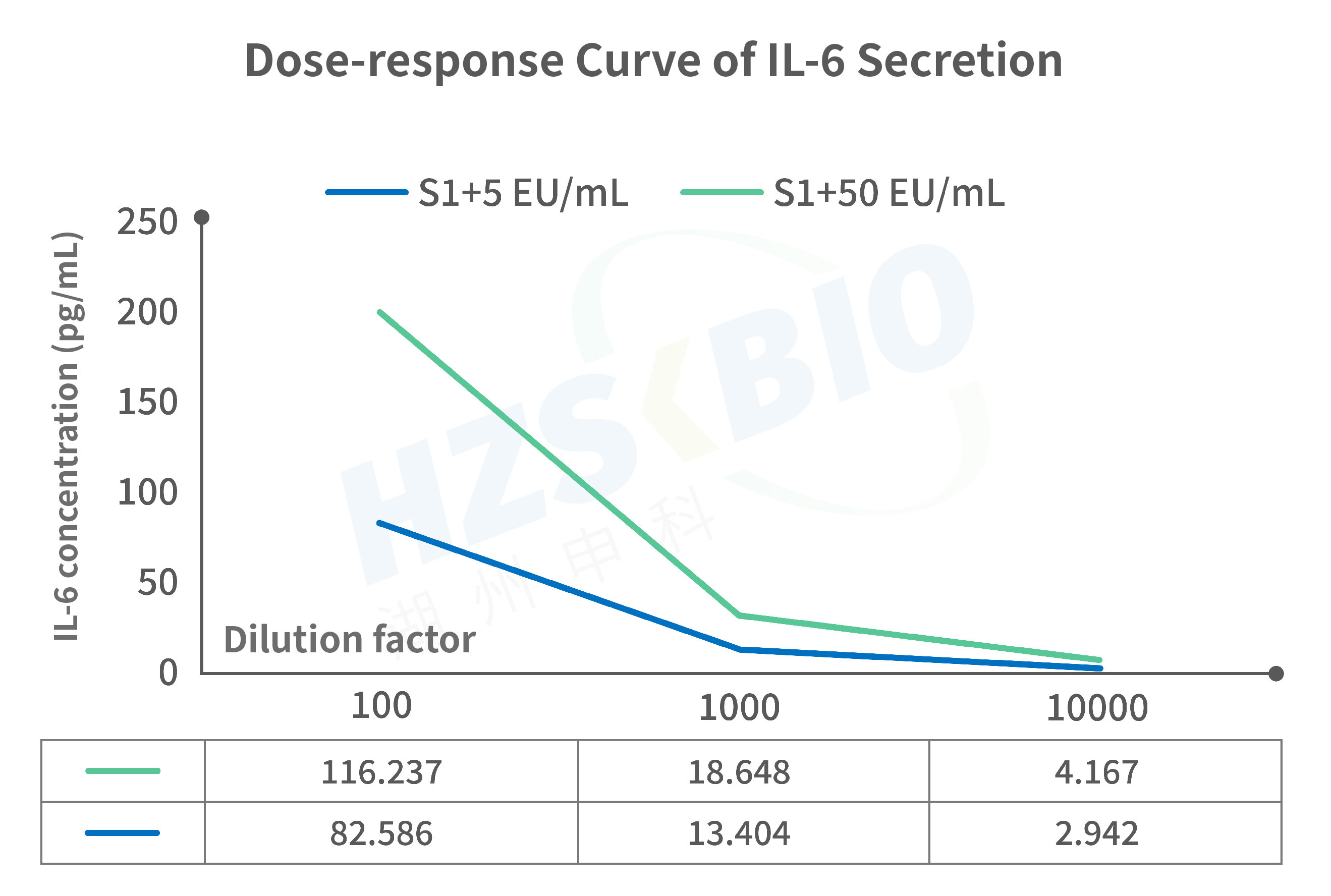
Figure 2. Partial dose-response data for IL-6 secretion generated with the PyroSup™ MAT Kit.
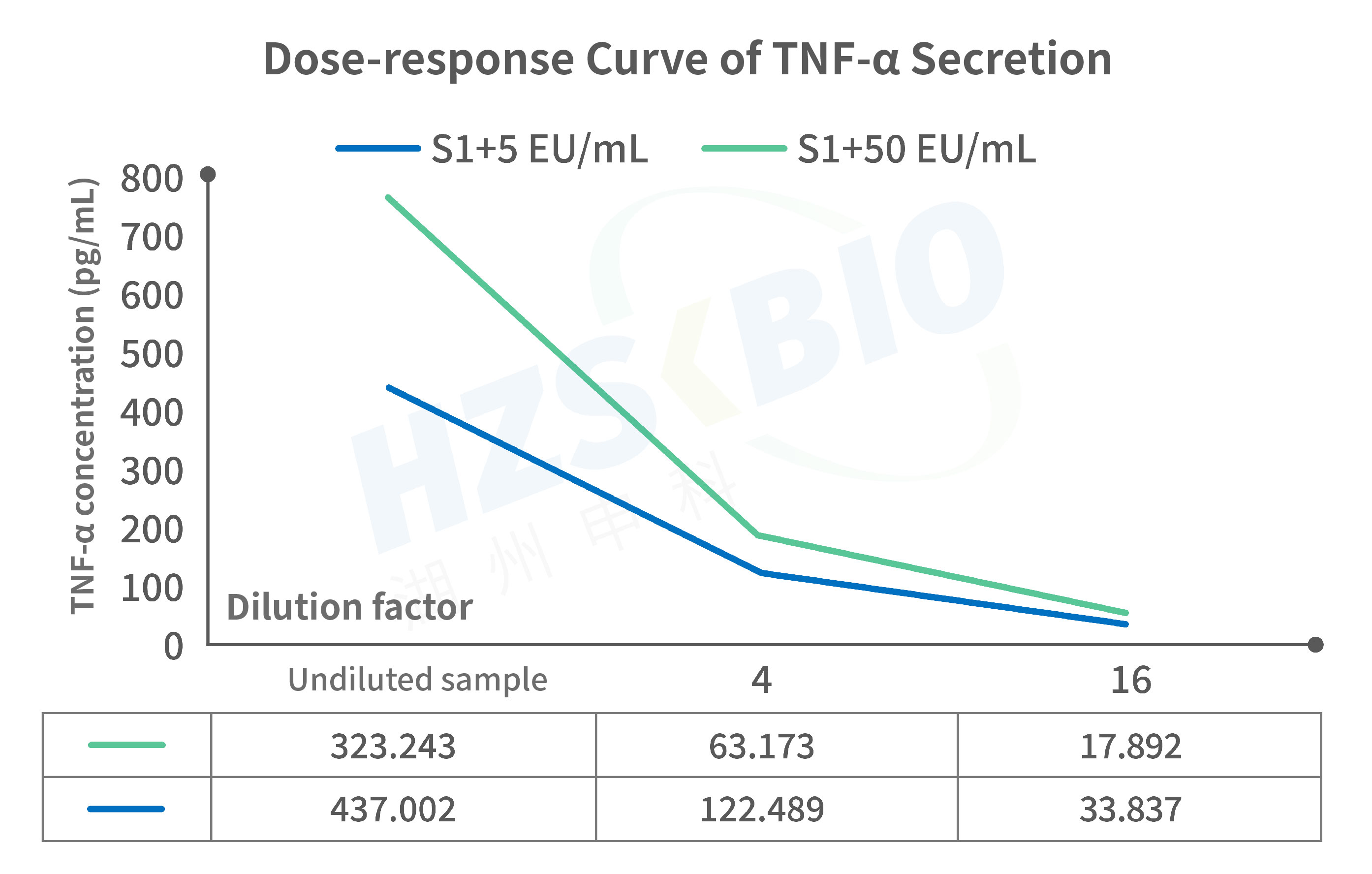
Figure 3. Partial dose-response data for TNF-α secretion generated with the PyroSup™ MAT Kit.
03 Conclusion
A complete scientific rationale supporting IL-6 selection is established across three tiers: fundamental pyrogenic pathogenic mechanisms, top-tier global expert consensus, and definitive in-house experimental validation. Thanks to its stable expression profile, exceptional detection sensitivity, wide linear range, and strong resistance to matrix interference, IL-6 is ultimately designated as the core quantitative biomarker of the PyroSup™ Pyrogen Detection Kit (MAT Method) from HZSKBIOⓇ.
References
[1] Thermo Fisher Scientific. Overview of Pro-Inflammatory Cytokines [Online]. Available from: https://www.thermofisher.cn/cn/zh/home/life-science/cell-analysis/cell-analysis-learning-center/immunology-at-work/proinflammatory-cytokines-overview.html
[2] Croce, C.M., Zhang, K., & Wei, Y.Q. (2016). Announcing Signal Transduction and Targeted Therapy. Signal Transduction and Targeted Therapy, 1, 15006. https://doi.org/10.1038/sigtrans.2015.6; PMC5661656
[3] Sundgren-Andersson, A.K., Östlund, P., & Bartfai, T. (1998). IL-6 is essential in TNF-α-induced fever. American Journal of Physiology-Regulatory, Integrative and Comparative Physiology, 275(6), R2028–R2033. https://doi.org/10.1152/ajpregu.1998.275.6.r2028
[4] Cirefice, G., Schütte, K., Spreitzer, I., Charton, E., Shaid, S., Viviani, L., Rubbrecht, M., & Manou, I. (2023). The future of pyrogenicity testing: Phasing out the rabbit pyrogen test. A meeting report. Biologicals, 84, 101702. https://doi.org/10.1016/j.biologicals.2023.101702