Products
Host Cell Residue Detection
Process Impurity Assay
Advnetitious Agent/Microorganism Testing
Pyrogen / Endotoxin Detection
Genetic Stability
Cell Line Characterization
Viral Titer Assay
Detection Equipment
Biochemical Reagents

With biopharmaceutical enterprises accelerating their pace of "going global", antibody drugs have become one of China’s popular overseas export categories besides antibiotics. As global pharmaceutical regulatory standards keep upgrading, the compliance requirements for pyrogen control have entered a critical upgrading stage.
Exclusive adoption of the Bacterial Endotoxin Test (BET) is insufficient to fully assess and control pyrogen risks. Accordingly, the risk assessment of Non-Endotoxin Pyrogens (NEP) has become a core review focus of European and American drug regulatory authorities for antibody drugs.
01 Alternative Evolution of the MAT Method
(1) Regulatory Requirements of the European Pharmacopoeia (EP)
· Effective July 1, 2025, EP 11.8 removed the Rabbit Pyrogen Test (RPT), designating MAT as the sole recommended alternative method;
· EP 12 clearly specifies that exclusive use of BET requires NEP risk assessment; MAT is a pharmacopoeia method capable of detecting all pyrogens, including endotoxins and NEPs;
· Starting from 2026, the NEP control strategy will be listed as a frequent deficiency item in EDQM inspections.
(2) United States Pharmacopoeia (USP) and Relevant Standards
· USP <1085>: A validated and equivalent MAT/BET method can replace the Rabbit Pyrogen Test.
· TRS 1043 (Guidelines for Quality Control of Monoclonal Antibodies): If only the BET method is used, NEP risk assessment shall be performed to determine the necessity of pyrogen testing. Given RPT’s poor repeatability and interspecies differences, MAT is recommended for release testing of finished products for pyrogens.
· USP Call for Alternative Pyrogen Test Methods: Starting from February 27, 2026, global data on non-animal alternative pyrogen detection will be collected, with a focus on evaluating MAT to provide references for potential revision or addition of general chapters in USP-NF.
02 NEP Risk Assessment and Control
In accordance with the provisions of Chapter 5.1.13 Pyrogenicity of EP:
· To eliminate the possibility of NEP presence in products, it is recommended to conduct cross-verification of BET and MAT with the same 3 batches of samples during production process development. If only 1 batch of sample is available, 3 independent tests shall be carried out on this single batch for verification, and the test results shall meet repeatability and precision requirements.
· If any changes are made to the production process that may affect product pyrogenicity (e.g., adoption of new raw materials, relocation of production sites, adjustment of process parameters), risk assessment shall be re-conducted.
· MAT testing is mandatory for all parenteral products if the presence of NEPs cannot be ruled out.
NEP Method Validation Requirements in Sections 2.6.30-6.5
· Preliminary tests shall include verification of the detection system using at least 2 types of NEP ligands (e.g., peptidoglycan, lipoteichoic acid, synthetic bacterial lipoprotein, flagellin, etc.), among which at least one ligand shall be spiked into the test formulation.
· If positive samples confirmed to be contaminated by NEPs are available from historical batches, such samples shall be prioritized for verification; if unavailable, NEPs that may be introduced by the production process can be selected for detection system verification.
Example of NEP Supplementary Response Description for Antibody Drugs
For the Rabbit Pyrogen Test, risk analysis shall be implemented to evaluate the potential presence of pyrogens in products, and in vitro methods shall be adopted for pyrogen testing in compliance with the current requirements of the European Pharmacopoeia.
Please contact our company if you need access to NEP supplementary response cases for antibody drugs.
03 Key Inducements of NEP Contamination in Antibody Drug Production Processes
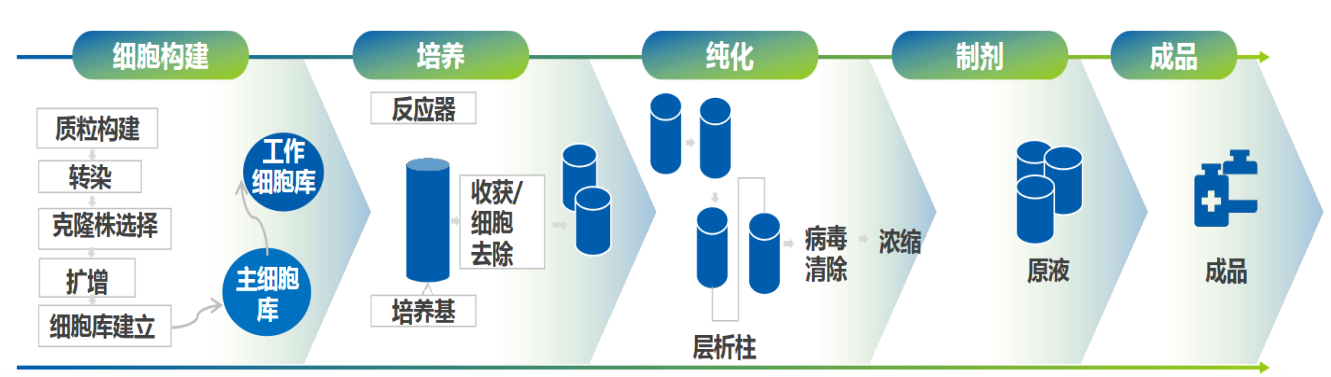
The development and production of antibody drugs cover multiple links including cell line construction, cell culture, protein purification, formulation and filling. The generation and introduction of NEPs run through the entire production workflow of antibody drugs, and risk assessment must cover all potential pyrogenic substances and influencing factors.
The following is a non-exhaustive list of factors to be considered in risk assessment:
· Cell Culture: The growth environment of engineered cells is susceptible to colonization by Gram-positive bacteria, which produce typical NEPs such as lipoteichoic acid (LTA) and peptidoglycan. In addition, host proteins and endogenous toxins generated by cellular metabolism also act as sources of NEPs.
· Purification Process: The depyrogenation capacity and residual impurities of chromatographic fillers, filter consumables and buffer solutions, as well as cross-contamination in process operation, may introduce NEPs.
· Other Links: Improper aseptic environment control in formulation excipient preparation and filling processes may also lead to NEP introduction.
Such NEP contamination cannot be detected by BET. Moreover, NEPs tend to synergize with trace endotoxins to amplify in vivo cytokine secretion, triggering severe clinical pyrogenic reactions and posing hidden safety risks for the clinical application of antibody drugs. For this reason, European and American regulatory authorities have formulated mandatory requirements for NEP detection of antibody drugs.
Leveraging profound matrix analysis capabilities, Huzhou Shenke provides customized and accurate solutions based on sample characteristics to efficiently meet the requirements of European and American registration, application and supplementary responses. In the fields of RPT-to-MAT technical transformation and NEP risk assessment, we offer full-chain validation services covering pretreatment development to registration support, effectively reducing compliance risks and accelerating the overseas launch of products.
Core Advantages of PyroSup™ Pyrogen Detection Kit (MAT Method)
Compliance Foundation for Registration: Clearly defined cell origin with commercial authorization from strain preservation institutions, eliminating compliance risks in regulatory declaration.
Regulatory Recognition and Stable Performance: Comprehensive performance validation jointly conducted with authoritative institutions; verified by customers and regulatory authorities with reliable quality and stable performance.
Complete MAT Solution: Full-process technical support including method development, method validation and compilation of registration application documents.
Proven Successful Cases: Supported multiple products to complete EU/FDA marketing registration with mature project experience.
Professional Qualifications: Certified by ISO13485 quality management system and accredited by CNAS laboratories, with rich experience in registration applications in China, the US and Europe.
Wide Sample Compatibility: Applicable to antibodies, vaccines, blood products, medical devices, chemical drugs, traditional Chinese medicine injections, raw materials and auxiliary materials and other product categories.
References
[1] Europaea, P. (2025) 2.6.30. Monocyte-activation test-11.8.
[2] Source: EDQM; Animal Welfare Progress; PA/PH/SG (07) 8
[3] 5.1.13. Pyrogenicity(EP12.3)
[4] Guidelines for the Production and Quality Control of Monoclonal Antibodies and Related Products for Pharmaceutical Use (TRS 1043)