Products
Host Cell Residue Detection
Process Impurity Assay
Advnetitious Agent/Microorganism Testing
Pyrogen / Endotoxin Detection
Genetic Stability
Cell Line Characterization
Viral Titer Assay
Detection Equipment
Biochemical Reagents

Against the backdrop of rapid development in the biologics industry, parallel multi-project operation has evolved from an operational strategy into an industry norm.
A single production line often needs to simultaneously host multiple monoclonal antibody (mAb) projects from different pipelines. Each project involves unique cell lines, differentiated raw material supply chains, diverse process parameters and complex scheduling rhythms.
While this highly intensive production model significantly improves capacity utilization and resource turnover efficiency, it also quietly stacks risks to an unprecedented level. Once an Unprocessed Bulk (UPB) sample of a project is contaminated with adventitious agents, the impact is not limited to a single failed batch. It may trigger a chain shutdown of the entire production line, resulting in equipment decontamination, validation restart, delays of subsequent projects and even a crisis of customer trust, ultimately evolving into a systemic delivery disaster.
For Chinese Hamster Ovary (CHO) cells, the most widely used engineering cell line, common adventitious agent contaminants in UPB include Mouse Minute Virus (MVM), Vesivirus 2117 and Mycoplasma.
· Mouse Minute Virus (MVM): Small in size, extremely stable in physical and chemical properties, and difficult to remove by conventional filtration or inactivation methods; it is the culprit of multiple global mAb production contamination incidents.
· Vesivirus 2117: Prone to missed detection in traditional in vitro cell culture methods, and can easily penetrate the entire production process without prior warning.
· Mycoplasma: The smallest self-replicating prokaryotic microorganism, lacking a cell wall, growing slowly and with a concealed morphology.
Therefore, rapid detection and identification of these adventitious agents in CHO cell harvest fluids are critical.
01 Regulatory Consensus: Risk Identification Must Be Moved Forward to the UPB Stage
Regulatory authorities worldwide have clearly signaled that risk control of adventitious agents must be moved forward to the critical node of Unprocessed Bulk in the early production stage.
ICH Q5A (R2) Viral Safety Evaluation of Biotechnology Products Derived From Cell Lines of Human or Animal Origin – Guidance for Industry emphasizes that adventitious virus testing of UPB is a key part of the three complementary lines of defense ensuring viral safety of products, and explicitly requires adventitious virus testing for every batch of UPB.
The FDA, in its 1997 Points to Consider in the Manufacture and Testing of Monoclonal Antibody Products for Human Use, stresses testing for adventitious viruses and Mycoplasma in UPB upstream of the purification process, prioritizing unfiltered samples as test subjects. If adventitious agents are detected, the material shall not be further processed or used.
The Chinese Pharmacopoeia (2025 Edition) also clearly stipulates in the General Monograph for Human Recombinant Monoclonal Antibody Products that each batch of harvest fluid shall be tested for adventitious risk factors such as bacterial endotoxin and Mycoplasma. Routine or specific adventitious virus contamination testing shall be conducted at an appropriate stage based on the production process and characteristics of materials used.
These regulatory trends all point to a core logic: risk identification must not be initiated until downstream purification is completed, but must be confirmed at the critical point of UPB.
Meanwhile, regulatory authorities are increasingly encouraging and accepting the use of advanced technologies to replace time-consuming traditional virus detection methods.
ICH Q5A (R2) states that based on risk assessment of potential contaminant introduction, Nucleic Acid Testing (NAT) methods are used for the detection of specific viruses (such as MVM) at the Unprocessed Bulk stage. Such rapid detection methods facilitate real-time decision-making.
Table 1. FDA Guidance Requirements for Adventitious Agent Testing of UPB, Intermediate Purification Products and Finished Products
Test Item | UPB | Intermediate Purification Product | Finished Product |
Sterility | +* | + | + |
Mycoplasma | + | - | - |
Adventitious Virus | + | - | - |
Species-specific Virus | + | - | - |
Retrovirus | + | - | - |
Polynucleotide | - | + | - |
Endotoxin | - | - | + |
02 Traditional Testing Is Time-Consuming and Hard to Match GMP Production Rhythm
The traditional culture method for Mycoplasma takes up to 28 days to obtain results, and the in vitro cell culture method for adventitious viruses requires a minimum of 14 days. The long detection cycle seriously lags behind the fast-paced modern Good Manufacturing Practice (GMP) production requirements. If adventitious agent contamination is not detected until the downstream stage or even before finished product release, enterprises will face multiple losses:
· Unaffordable high disposal costs;
· Complete disruption of the originally tightly arranged multi-project schedule, which seriously affects drug supply;
· For Contract Development and Manufacturing Organization (CDMO) enterprises, severe damage to customers' fundamental confidence in their delivery capabilities.
03 DetecInnova Integrated Testing Platform: 3-Hour Rapid Detection of UPB Adventitious Agents
Based on NAT technology and an independent microfluidic fully automatic analysis system, the DetecInnova Integrated Testing Platform realizes integrated operation of automatic extraction, amplification and detection of viral/Mycoplasma nucleic acids.
This system can simultaneously complete rapid and high-sensitivity nucleic acid detection of Mycoplasma and specific viruses (MVM + VV-2117) at the UPB stage, compressing the time for critical result confirmation to within 3 hours, and accelerating the biosafety testing of adventitious agents in UPB.
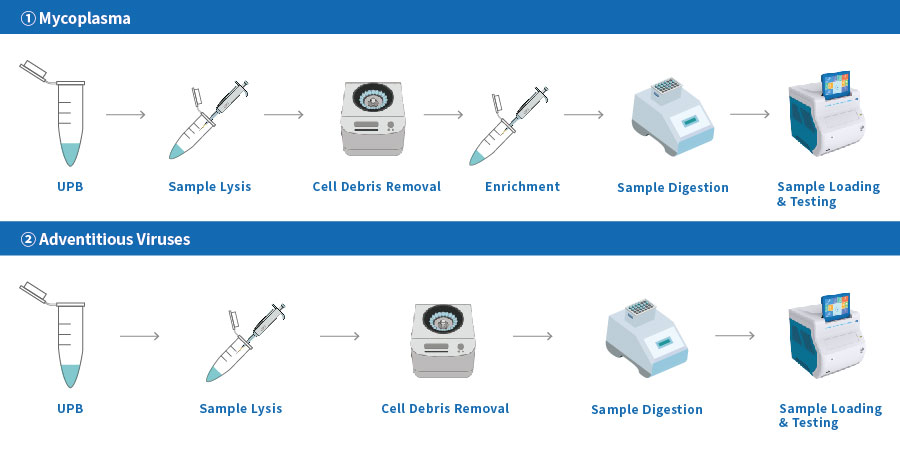
Figure 1. DetecInnova Integrated Adventitious Agent Testing Process for UPB Samples
In the process of commercial production of antibody drugs, the use of the DetecInnova Integrated Testing Platform aligns with the current trend of adopting NAT rapid nucleic acid testing methods. Before materials officially enter the expensive and irreversible downstream purification process, it helps enterprises make release or reject decisions based on rapid test results.
04 Forward Risk Migration: The Core Strategy for High-Quality Delivery of Biologics Enterprises
In the era of parallel multi-project operation, truly mature and leading enterprises must possess the strategic thinking and technical implementation capabilities of forward risk migration, strengthen the image of GMP risk control, and improve audit pass rate.
Locking viral and Mycoplasma risks firmly at the UPB stage is not simply adding an additional testing process, but installing an intelligent, agile and reliable last safety valve for the entire high-value production line. The existence of this safety valve makes the production process more predictable, controls high-value batch losses, and reduces uncertain inventory occupation.
For CDMO enterprises operating multiple projects, it can make project delivery more stable and reliable, and provide customers with real peace of mind in complex outsourcing cooperation.
This is precisely the key for future biologics CDMOs to win long-term trust and market position.
DetecInnova Integrated Testing Platform Products
Item No. | Product Name | Specification |
1603101 | Fully Automatic Nucleic Acid Testing and Analysis System for Adventitious Agents (4 Channels) | AdvSHENTEK-4system |
1603105 | Fully Automatic Nucleic Acid Testing and Analysis System for Adventitious Agents (16 Channels) | AdvSHENTEK-16system |
16031010411 | Integrated Mycoplasma Test Card | 8 pcs/box |
16031010413 | Integrated CHO Virus (MVM/VV-2117) Test Card | 8 pcs/box |