Products
Host Cell Residue Detection
Process Impurity Assay
Advnetitious Agent/Microorganism Testing
Pyrogen / Endotoxin Detection
Genetic Stability
Cell Line Characterization
Viral Titer Assay
Detection Equipment
Biochemical Reagents

In the production quality control of CAR-T cell products, the mismatch between the release testing cycle and the product life cycle has always been a core challenge of quality control. Product preparation is completed and patients are ready for administration, yet the traditional mycoplasma culture method involves a testing cycle as long as 28 days, which far exceeds the shelf life of only a few days for cell therapy products. This contradiction is particularly prominent in the field of Advanced Therapy Medicinal Products (ATMPs) — every one-day delay in product release narrows the patient’s treatment window.
The traditional culture method suffers from not only a long testing cycle but also the risk of missing viable but non-culturable (VBNC) mycoplasma. While the indicator cell culture method shortens the cycle to 7–10 days, it involves cumbersome operations and still cannot meet the demand for rapid release. The emergence of Nucleic Acid Amplification Technology (NAT) provides a technical solution to this problem. Based on the amplification and detection of mycoplasma-specific DNA sequences, the NAT method can reduce the testing cycle to 3–5 hours, enabling genuine rapid testing and release.
01 2026 New Regulatory Rules: Established Status and Technical Framework Upgrade of NAT Method
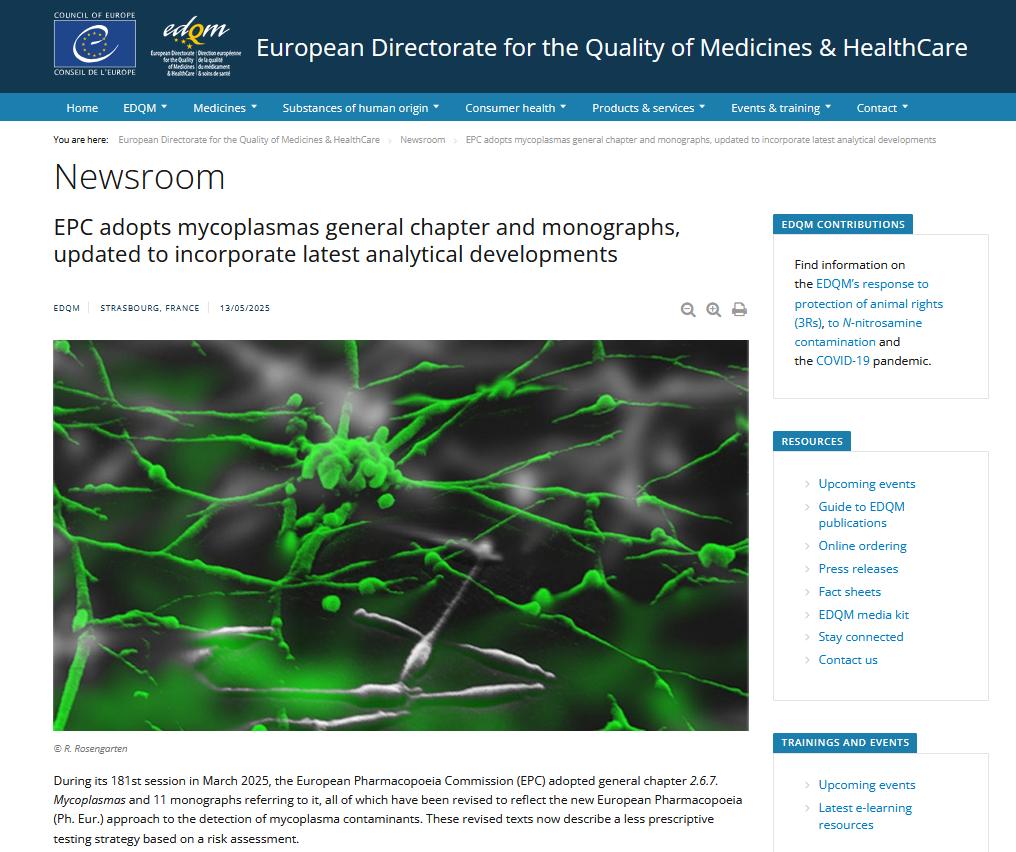
2026 marks a pivotal historical milestone for mycoplasma NAT testing. The European Directorate for the Quality of Medicines & HealthCare (EDQM) released an official announcement on May 13, 2025, confirming the revisions to European Pharmacopoeia (EP) Chapter 2.6.7 (Version 12.2). According to the revised monograph Mycoplasmas in EP 2.6.7 (Version 12.2), which shall come into force on April 1, 2026, the NAT method is explicitly designated as one of the three core official methods alongside the culture method and indicator cell culture method. This means that with adequate methodological validation, the NAT method has obtained the compliance basis to replace traditional pharmacopoeial methods.
Major technical updates to the NAT method in the new EP version are as follows:
Expanded detection scope and refined classification: Clearly covering the class Mollicutes, including Mycoplasma, Ureaplasma, Acholeplasma, Spiroplasma and other genera, with a broader detection scope and more detailed classification.
Improved scientific sampling strategy: Emphasizing that mycoplasma may attach to or reside inside cells, both cell pellets and supernatant shall be sampled for testing.
Mandatory requirement for inhibitor testing: Consistent with the culture method, inhibitor testing is newly added for both the indicator cell culture method and nucleic acid testing, with specific protocols and test contents specified to eliminate the interference of product matrix on PCR reactions.
Quantified validation criteria: Adopting WHO International Standard for Mycoplasma DNA as a calibration tool, and stipulating the acceptance criterion of GC/CFU ratio < 10 for reference standards, enhancing the comparability of NAT test results.
02 Methodological Validation: The Compliance Passport for Rapid NAT Detection
For cell therapy enterprises, the core concern in adopting the NAT method lies in regulatory compliance. At present, the European Pharmacopoeia (EP), Japanese Pharmacopoeia (JP) and United States Pharmacopoeia (USP) have all incorporated the NAT method into mycoplasma detection standards. Although the 2025 edition of the Chinese Pharmacopoeia has not officially included the NAT method, it clearly states that "other methods recognized by the national pharmaceutical verification authority may also be adopted". Regulatory authorities worldwide share a consistent recognition logic for alternative detection methods: new methods are acceptable only if proven non-inferior to existing conventional methods.
In accordance with the Technical Guidelines for Pharmaceutical Research and Evaluation of Cell Therapy Products (Trial) issued by the Center for Drug Evaluation (CDE) of the National Medical Products Administration (NMPA) in 2022, novel detection methods can be developed when pharmacopoeia-standard methods fail to meet requirements under special circumstances such as limited sample volume or urgent rapid release, provided that full methodological validation is completed. The validation roadmap for the NAT method centers on comparative research to prove that the new method is non-inferior or superior to traditional methods:
| Validation Dimension | Technical Requirement | Acceptance Criteria |
| Replacement of Culture Method | Limit of Detection (LOD) validation | ≤10 CFU/mL |
| Replacement of Indicator Cell Culture Method | Limit of Detection (LOD) validation | ≤100 CFU/mL |
| Comparative Evaluation | Parallel testing with identical samples and strains | Sensitivity of NAT method shall be equivalent or superior to traditional methods |
| Inhibitor Testing | Product matrix applicability | Spike recovery rate: 70–130%; no significant inhibition |
| Reference Standard Quality Control | Strain characterization and quantification | GC/CFU ratio of viable reference strains < 10 |
A complete validation system shall also cover specificity, robustness, product-specific inhibitor testing, and electronic record management compliant with 21 CFR Part 11.
03 Mycoplasma NAT Detection Service System of Huzhou Shenke Biotechnology Co., Ltd. (HZSKBIOⓇ)
Based on the above regulatory framework and technical logic, HZSKBIOⓇhas built a comprehensive mycoplasma NAT detection and methodological validation service system complying with the pharmacopoeia requirements of China, the United States and Europe, addressing the pain points of Cell and Gene Therapy (CGT) enterprises including difficulties in method establishment, long validation cycles and high regulatory communication costs.
Platform Qualifications: CNAS accreditation; BSL-2 enhanced laboratory.
Kit Performance: The MycoSHENTEK® Mycoplasma Detection Kit has passed cross-laboratory verification in three major regions, with a sensitivity of up to 10 CFU/mL and coverage of approximately 200 mycoplasma and related species; registered with FDA DMF (Filing No.: MF29624).
Validation Strains: All validation strains are traceable to well-known culture collection institutions with official authorization, complying with EP requirements for the GC/CFU ratio of strain reference standards.
Regulatory Interpretation and Communication Support: In-depth interpretation of pharmacopoeial differences among China, the US and Europe to assist enterprises in formulating optimal validation strategies; equipped with a technical team with experience in communication with drug inspection and regulatory authorities to assist in drafting methodological validation and comparative study protocols, undertaking service commissions and supporting on-site inspections.
Project Coverage: The integrated solution for mycoplasma NAT testing and comparative research has been widely applied to domestic CGT projects with successful IND filings, and supported pivotal BLA studies and post-marketing variations of listed products.
04 Practical Case: Method Modification of a Commercially Available CAR-T Product
Project Background:A commercially available autologous CAR-T product adopted the MycoSHENTEK® Mycoplasma qPCR Detection Kit for rapid batch release.
Technical Challenges
The product is an autologous cell preparation with large batch-to-batch variations and complex matrix effects.
It is necessary to prove the equivalent performance of the NAT method in replacing both the 28-day culture method and the 7-day indicator cell culture method.
The validation protocol must comply with regulatory requirements and pass review and re-inspection by drug inspection authorities.
Validation Pathway
Methodological validation and comparative studies were conducted in accordance with EP 2.6.7 and domestic technical guidelines. Parallel testing of identical samples and strains was performed using both the NAT method and traditional methods, with key evaluation of limit of detection, specificity and robustness.
Application Outcome
The validation protocol and report were recognized by regulatory authorities, successfully passing official re-inspection, achieving compliant modification from the traditional culture method to the NAT method for the listed product.
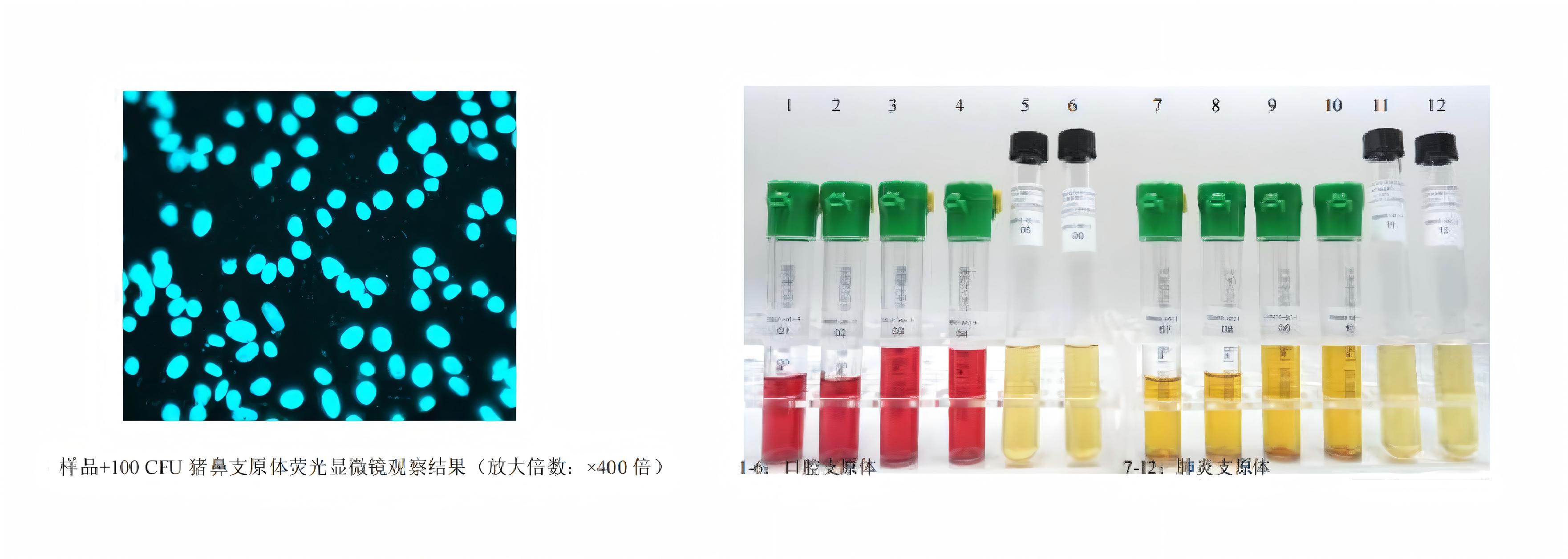
Figure 1: Comparison of indicator cell culture method Figure 2: Comparison of culture method (Test sample spiked with Mycoplasma orale / Mycoplasma pneumoniae)
05 Conclusion
From a 28-day cycle to 3 hours, the change lies not only in the time scale but also in the iteration of quality control logic. In the ATMPs era, fully validated NAT methods are evolving into a compliance bridge linking product safety and clinical accessibility.
With the successive implementation of regulations including EP 2.6.7 (12.2), USP <77> and ChP 2025, mycoplasma NAT detection has been upgraded from an "alternative method" to a "core standard method". For CGT enterprises, selecting a service provider with in-depth regulatory understanding, validated experience for specific products and localized rapid response capability is the key to achieving compliant rapid detection and release.
HZSKBIOⓇ will continue to track global regulatory updates. Leveraging the MycoSHENTEK® technology platform, we provide innovative pharmaceutical enterprises with mycoplasma detection solutions meeting the world's highest standards, empowering the safe and rapid launch of advanced therapeutic medicinal products.