Products
Host Cell Residue Detection
Process Impurity Assay
Advnetitious Agent/Microorganism Testing
Pyrogen / Endotoxin Detection
Genetic Stability
Cell Line Characterization
Viral Titer Assay
Detection Equipment
Biochemical Reagents

In mycoplasma testing based on nucleic acid amplification technology (NAT), the limit of detection (LOD) is generally regarded as a core indicator for assay sensitivity. However, a commonly overlooked issue in practical methodological verification and application is that the reliability of LOD primarily depends on the quality of mycoplasma strains.
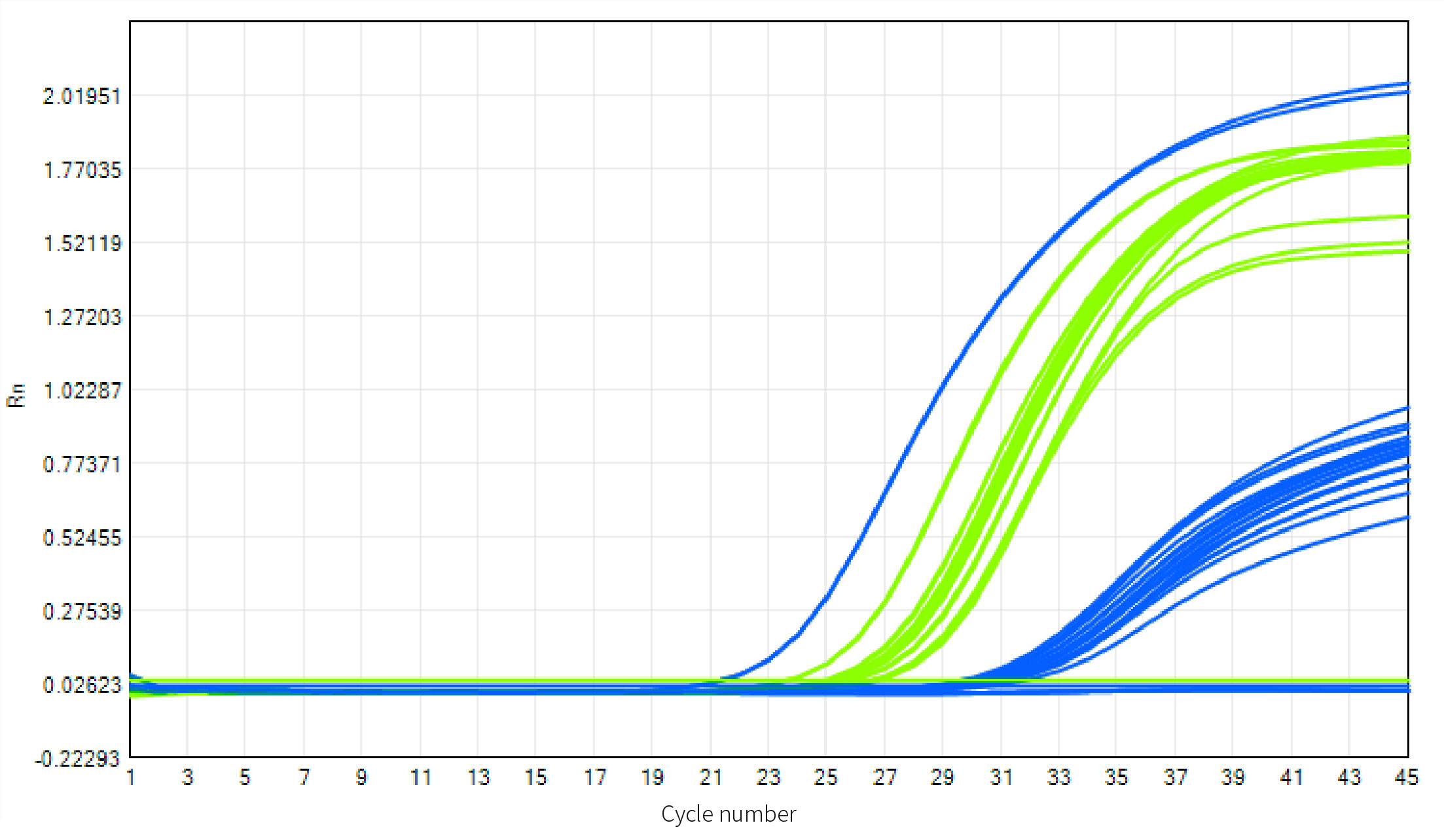
qPCR Amplification for Mycoplasma Detection
01 Essence of NAT Assays: Detection of Mycoplasma Nucleic Acids
Unlike culture-based methods, NAT directly detects mycoplasma DNA signals, which means:
NAT cannot distinguish between viable and dead bacteria.
Test results are highly dependent on the gene copy number (GC) in samples.
For mycoplasma strains, colony-forming unit (CFU) is the universally adopted biological quantification unit in the industry. Notably, there is no fixed proportional relationship between GC and CFU.
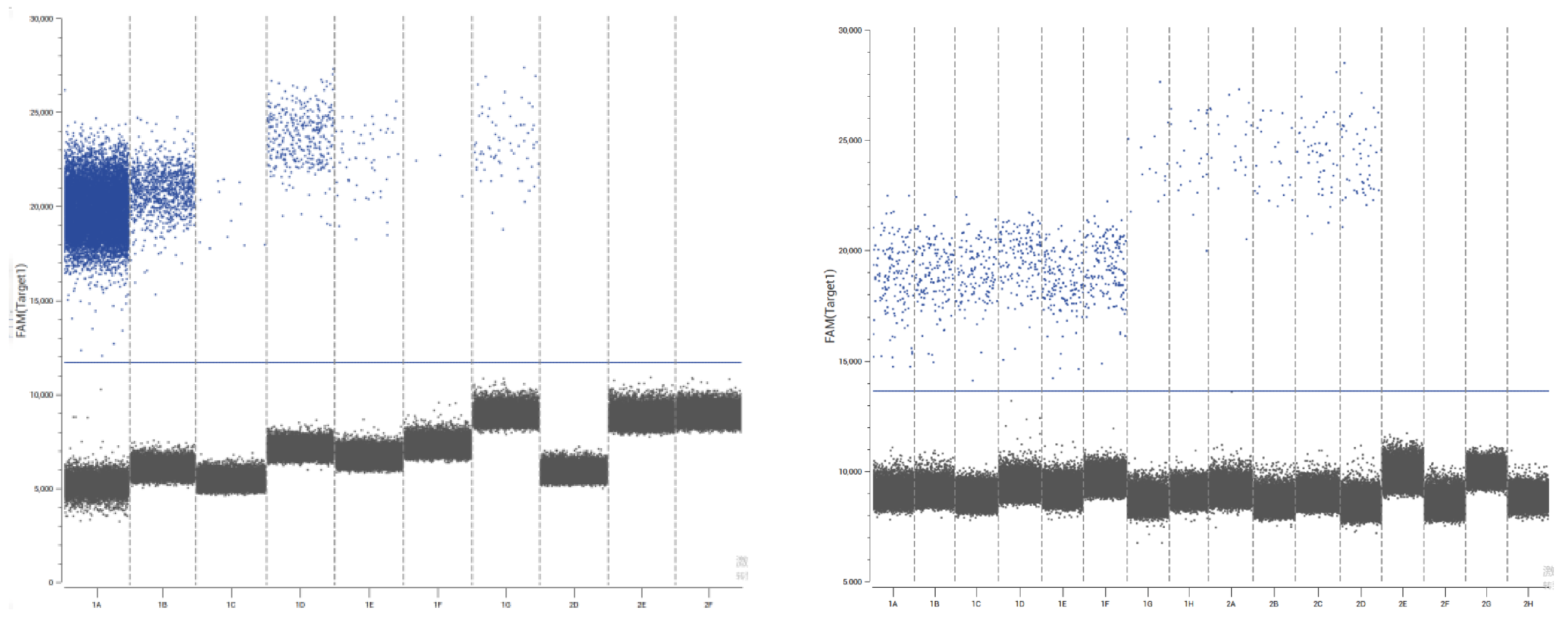
dPCR for Quantification of Mycoplasma Gene Copy Number (GC)
02 GC/CFU Ratio: A Critical yet Hidden Factor Affecting LOD
The preparation of mycoplasma strains faces multiple challenges:
Mycoplasma tends to aggregate and is difficult to disperse uniformly.
Different mycoplasma species require distinct culture conditions, leading to complex production processes.
Mycoplasma cells are tiny and hard to count via direct observation.
Dead bacteria are easily generated during cultivation.
Dead bacteria release cell-free DNA, which substantially increases the GC content.
An excessively high GC/CFU ratio will lead to the following consequences:
The LOD appears falsely lower in numerical data.
The actual detection signals may mainly originate from nucleic acids of dead bacteria.
A high nucleic acid concentration lowers the technical requirements for the detection system.
The sensitivity of nucleic acid assays is artificially overestimated.
03 Industry Consensus: Not All Strains Are Suitable for LOD Verification
3.1 General Industry Recognition
Standard mycoplasma strains provided by ATCC feature superior consistency and traceability.
The GC/CFU ratio of most qualified strains is generally controlled below 10 (unless otherwise specified).
Strains applicable to LOD verification and methodological validation of NAT assays shall be selected.
3.2 Requirements for Strains in Draft EP 2.6.7 (Pharmeuropa 36.1)
Mycoplasma shall be harvested at the exponential growth phase to guarantee strain viability.
CFU shall be quantified prior to cryopreservation of working suspensions or diluents.
CFU quantification shall be performed in multiple replicates.
Both supernatant and cellular fractions must be taken into account when determining the gene copy number (GC).
Acceptance criteria for the GC/CFU ratio: Unless otherwise specified, the GC/CFU ratio of reference materials shall be less than 10.
3.3 Strain Requirements in USP <77> Draft
Mycoplasma cultures shall be enumerated, and the gene copy number (i.e., GC/CFU ratio) shall be characterized.
3.4 Strain Requirements in JP G3-14-170
The correlation between CFU and nucleic acid copy number of the strain bank (i.e., GC/CFU ratio) shall be established in advance.
04 Why Strain Quality Is Crucial for Quality Control and Regulatory Compliance
For mycoplasma testing using nucleic acid assays, attention should be paid not only to whether the assay is sufficiently sensitive, but also to the following questions:
Does the detected sensitivity truly reflect the risk of contamination?
Is the LOD established based on biologically authentic verification?
Strain quality acts as a vital link between assay performance and product release risks. In addition, the validation status of the testing methods used for strain calibration also greatly affects strain quality:
The culture system shall be validated to ensure the detection sensitivity of culture media.
The GC quantification method shall be validated to ensure reliable results (different GC quantification methods may produce discrepant outcomes).
05 Core Conclusion
In mycoplasma nucleic acid testing, a low LOD only possesses practical quality significance when it is established on the basis of high-quality mycoplasma strains.